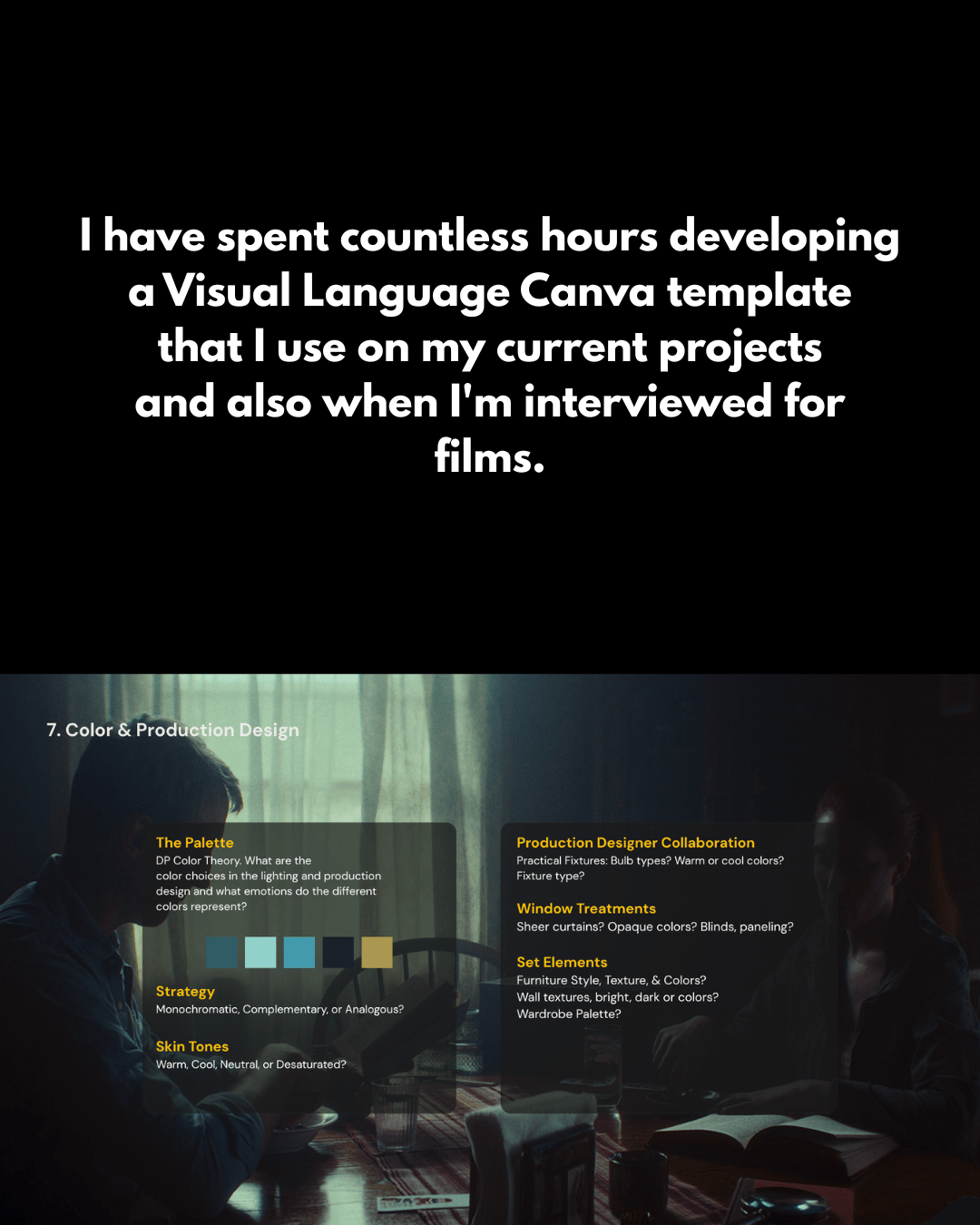
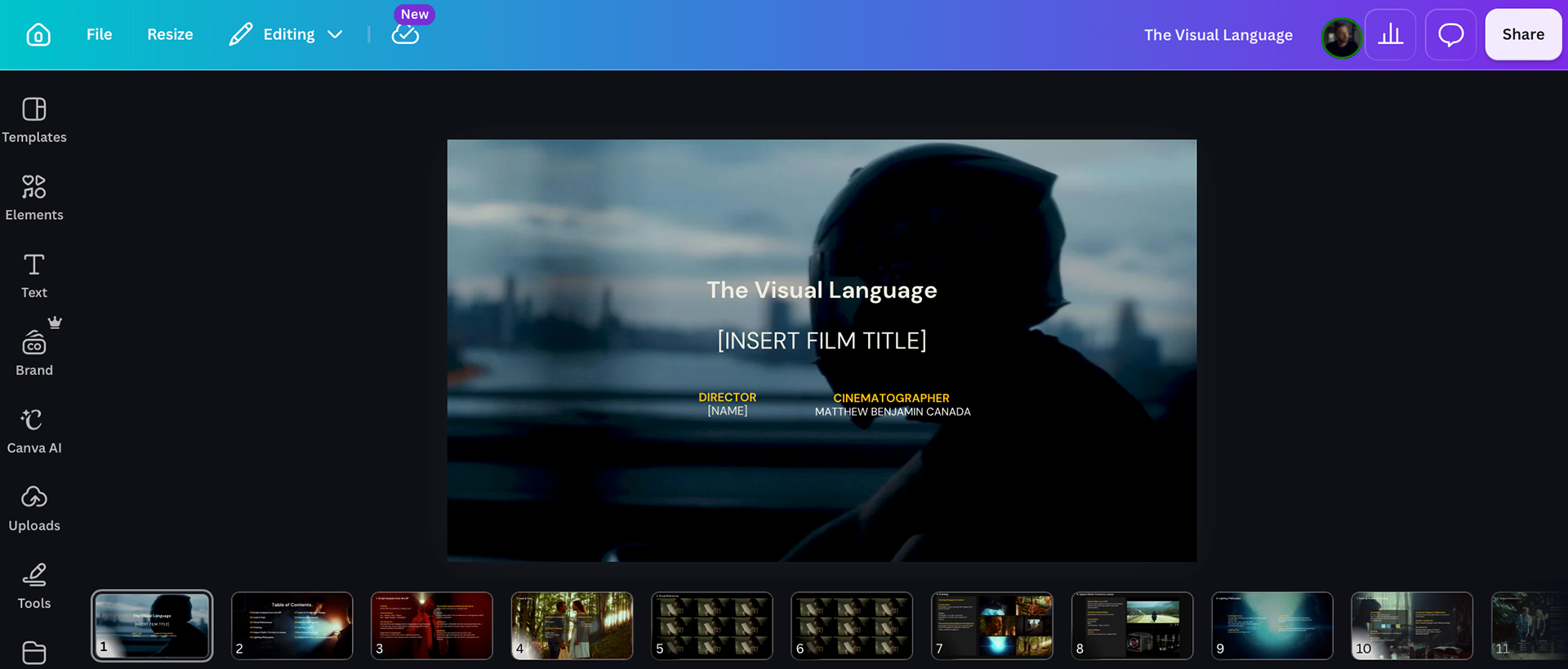
I have spent countless hours developing a Visual Language Canva template that I use on my current projects and also when I'm interviewed for films.
This is for cinematographers. Use this on your next project.
I am offering this 15 page Canva template to anyone who wants it.
Submit your email here and I'll get it to you! 100% free.
Canva template link: https://canva.link/34dk2yg8cn4hag8
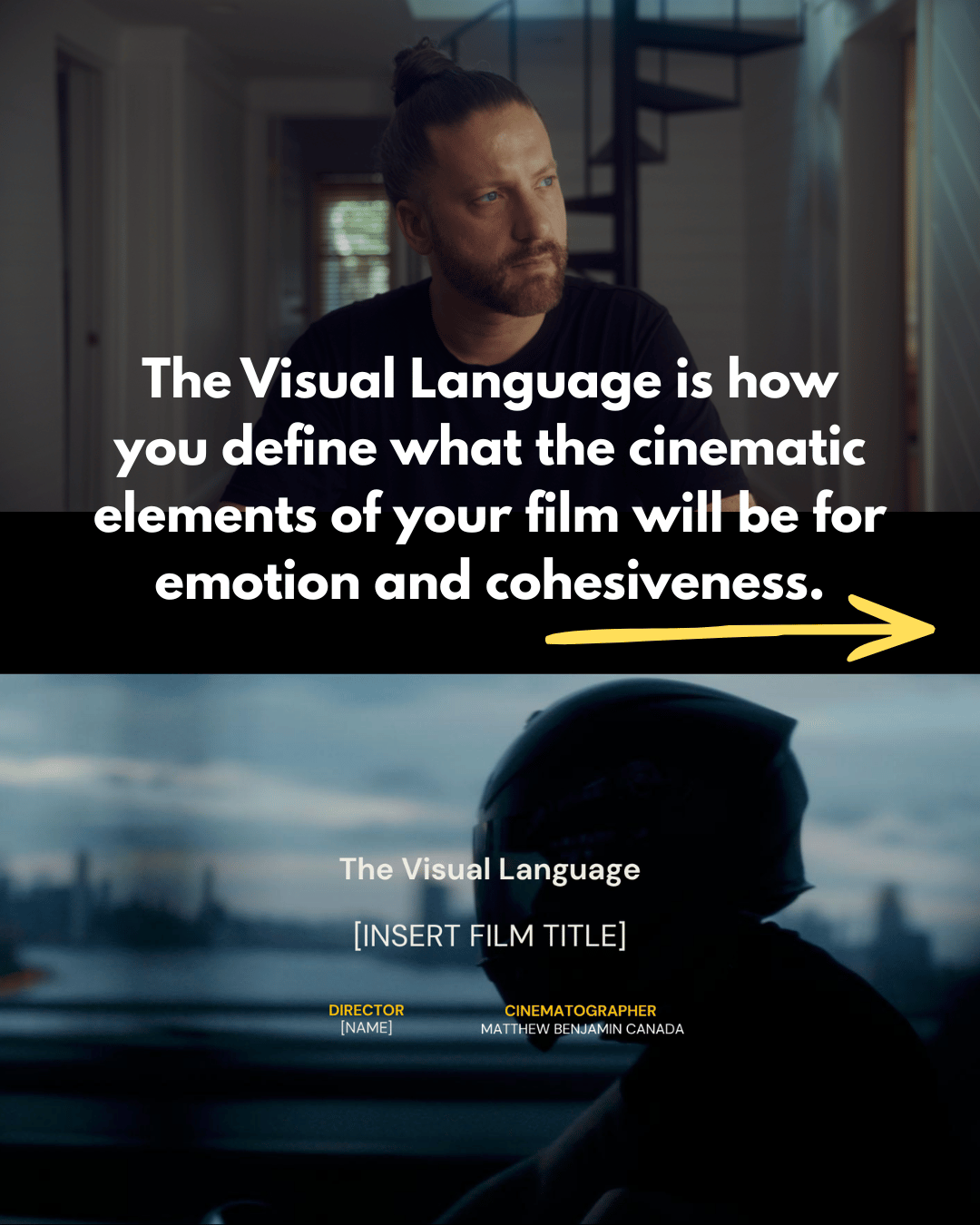
The Visual Language is how you define what the cinematic elements of your film will be for emotion and cohesiveness.
The Visual Grammar Checklist:
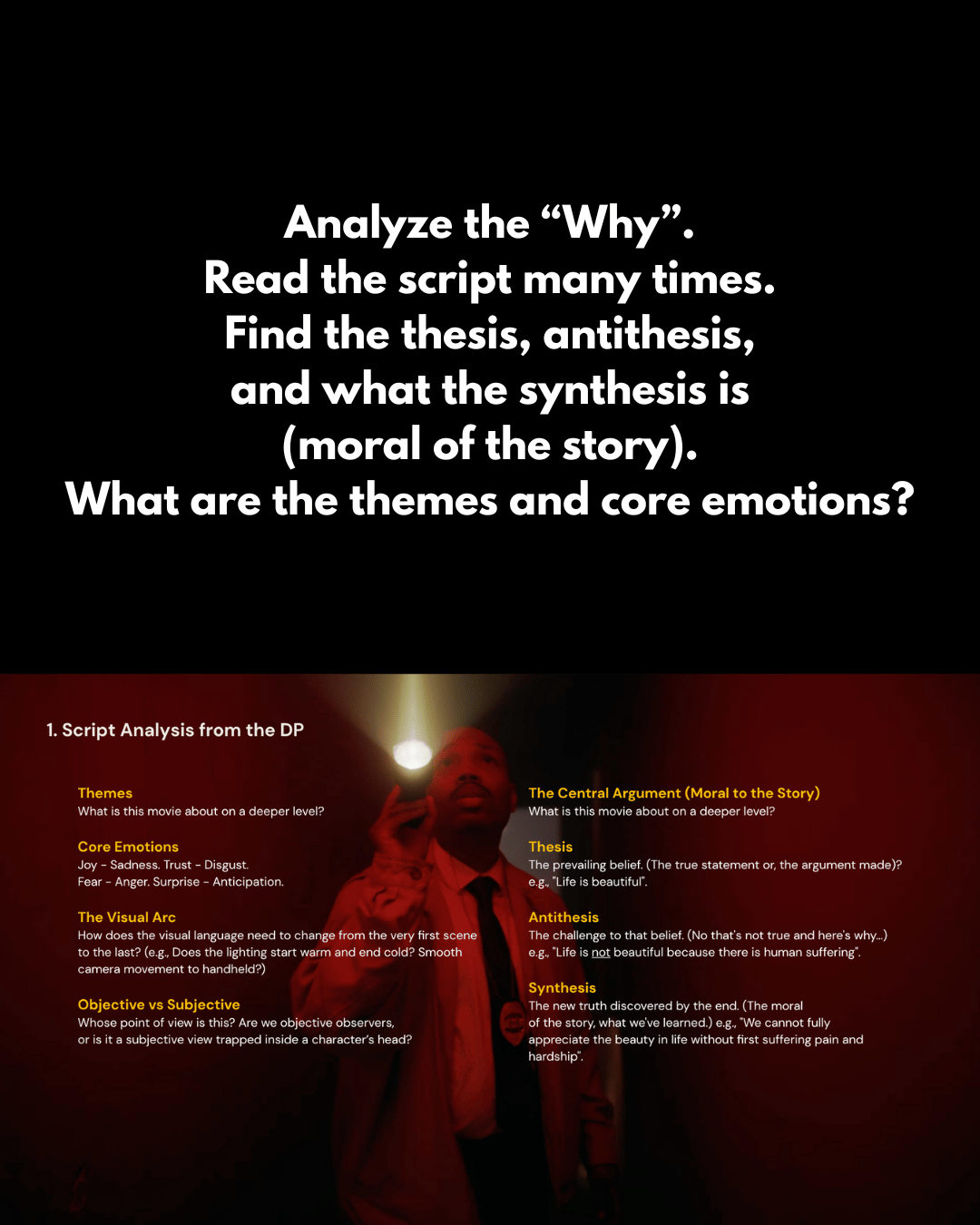
1. Analyze the “Why”: Read the script many times. Find the thesis, antithesis, and what the synthesis is (moral of the story). (shoutout Craig Mazin). What are the themes and core emotions?
2. Define the Point of View: Is the camera an objective observer vs subjective - (trapped in the character’s head)?
3. Choose Your Texture: Lenses, camera format, lighting contrast, color tones, aspect ratio.
4. Motivate the Movement: Don’t move the camera unless there’s a narrative reason. What is the subtext of the shot? Also do this for framing.
5. Visual Motifs: Use repetition to build rhythm and symbolism to explain the “unspoken.”
Bonus: Have your show LUT ready before day one. If it looks sweet on the monitor, it’ll look even better in the grade.
#Cinematography #FilmmakingTips #VisualLanguage #DirectorOfPhotography #Storytelling #Cinematographer
The Visual Grammar Checklist:
1. Analyze the “Why”: Read the script many times. Find the thesis, antithesis, and what the synthesis is (moral of the story). (shoutout Craig Mazin). What are the themes and core emotions?
2. Define the Point of View: Is the camera an objective observer vs subjective - (trapped in the character’s head)?
3. Choose Your Texture: Lenses, camera format, lighting contrast, color tones, aspect ratio.
4. Motivate the Movement: Don’t move the camera unless there’s a narrative reason. What is the subtext of the shot? Also do this for framing.
5. Visual Motifs: Use repetition to build rhythm and symbolism to explain the “unspoken.”
Bonus: Have your show LUT ready before day one. If it looks sweet on the monitor, it’ll look even better in the grade.
#Cinematography #FilmmakingTips #VisualLanguage #DirectorOfPhotography #Storytelling #Cinematographer